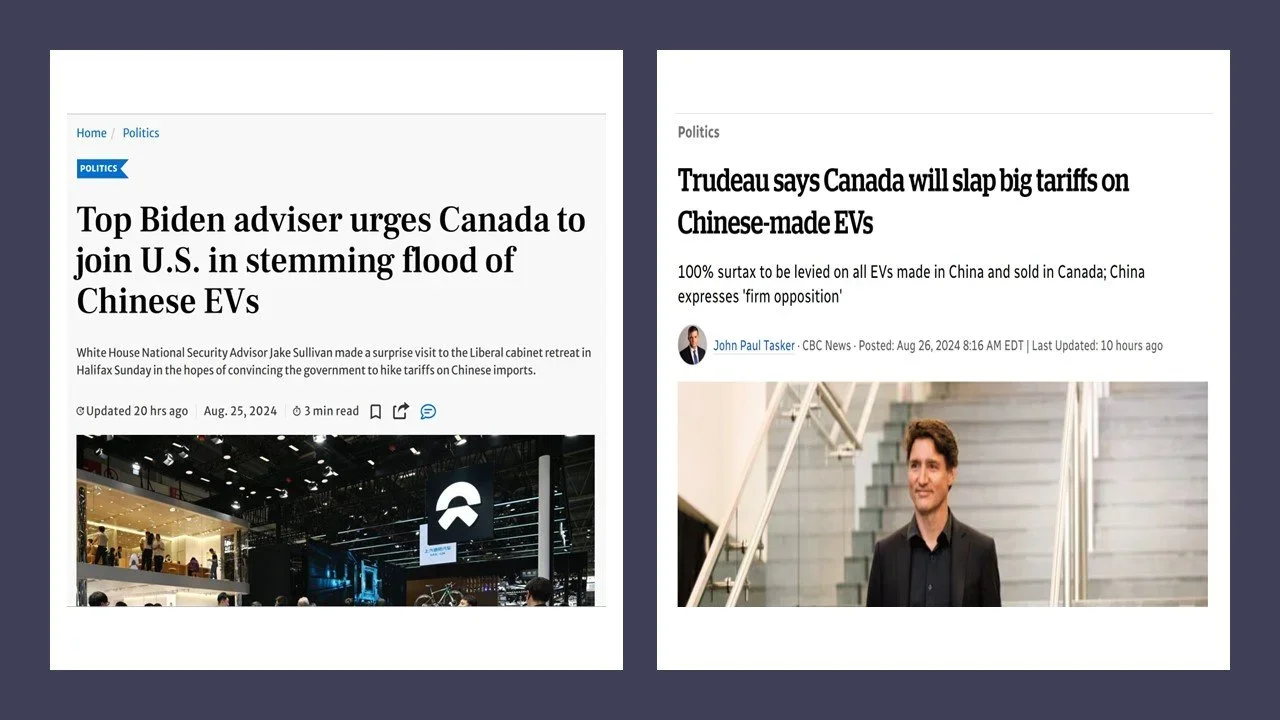
The US has never stopped trying to derail Canada-China cooperation, for nearly a decade

Editor’s note: The Canada Files is the country's only news outlet focused on Canadian foreign policy. We've provided critical investigations & hard-hitting analysis on Canadian foreign policy since 2019, and need your support.
Please consider setting up a monthly or annual donation through Donorbox.
Written by: Aidan Jonah
Previously, The Canada Files exposed how Canada’s government has spent decades assisting ‘Tibet’ dissidents in Canada to rise to their current relevance in Canada’s China policy discussions. But, to think that Canada’s government itself is the only force which drives its lack of respect towards China’s sovereignty, a stand which limits opportunities for rational economic cooperation between Canada and China. The US government continues to be the most powerful force on the North American continent pushing Canada away from China, and towards hostility.
The National Endowment for Democracy (NED) is a US government organization which conducts overt operations to push for regime change and entrenchment of ‘allies’ it had fought to control, explained well by founding member Allen Weinstein, who told the Washington Post in 1991, “A lot of what we do today was done covertly 25 years ago by the CIA.”
One only has to look at the early PM Justin Trudeau years to see some decisive moments where the US’ intentions shone through.
Early 2018 was the start of a hazardous path forwards. Academic John Price (Emeritus Professor at the University of Victoria) noted in a January 2024 discussion paper:
“heads of the CIA, FBI, and other US intelligence agencies, appointed by Donald Trump, launched what the Wall Street Journal called an unprecedented campaign in early 2018 to portray China and the telecom giant Huawei as a major threat to the Five Eyes, composed of the US, Canada, the UK, Australia, and New Zealand.”
After which, Price emphasized that:
“Attending Five Eyes’ meetings in London (UK) and in Halifax was CSIS director David Vigneault who uncritically accepted the US accusations, rushing to share them with Justin Trudeau in the spring and summer of 2018. Fully informed of US accusations, the Canadian government willingly accepted the US request to extradite Huawei executive Meng Wanzhou. The firestorm that erupted with the subsequent arrests of Michael Spavor and Michael Kovrig plunged Canada-China relations into a crisis from which they have yet to recover.”
With US President Trump having already broken off the North American Free Trade Agreement (NAFTA) which came into force back in 1994, negotiations for a new trade agreement eventually known as the United States Mexico Canada Agreement (USMCA) saw Canada and Mexico make a key concession in service of the US hostile foreign policy towards China.
Article 32.10(5) of the USMCA states that:
“Entry by a Party into a free trade agreement with a non-market country will allow the other Parties to terminate this Agreement on six months’ notice and replace this Agreement with an agreement as between them (bilateral agreement).”
Poisoning the well further, is that the USMCA requires, in Article 32.10(3):
“Upon request of another Party, a Party intending to commence free trade negotiations with a non-market country shall provide as much information as possible regarding the objectives for those negotiations.”
Going even further, the USMCA also requires, in Article 32.10(4), to strip any privacy Canada/Mexico and China would have in conducting Free Trade Agreement negotiations:
“As early as possible, and no later than 30 days before the date of signature, a Party intending to sign a free trade agreement with a non-market country shall provide the other Parties with an opportunity to review the full text of the agreement, including any annexes and side instruments, in order for the Parties to be able to review the agreement and assess its potential impact on this Agreement.”
Article 32.10 of the existing USMCA, as noted by China’s embassy in Ottawa in 2018, is clearly meant to fiercely deter Canada or Mexico from pursuing an FTA with China.
The USMCA was signed initially on November 30, 2018, but it only entered into force by July 2020, since renegotiations occurred, due to opposition by US Congress legislators, which took until Decemeber 10, 2019 to result in a revised and final agreement.
A day after the USMCA was initially signed, Canada kidnapped Huawei CFO Meng Wanzhou on the US’ behest, driven by the US’ unilateral move in May of that year, to end the US-Iran JCPOA that saw Iran cut its nuclear program down in exchange for firm sanctions reductions. The ‘Two Michaels’ were arrested by China soon afterwards and Canada’s media uncritically rushed to defend them, as The Canada Files covered in depth back in 2021. After this rapid series of events, relations between Canada and China deteriorated, blocking a formerly burgeoning opportunity for a Canada-China free trade deal and route towards Canada joining China’s Belt & Road Initiative.
Then came the NED’s money to build on the inroads it had made against the potential for positive Canada-China cooperation.
2020 was a banner year for NED interference in Canada.
In April 2020, the Uyghur Rights Advocacy Project (URAP) organization was founded by Mehmet Tohti.
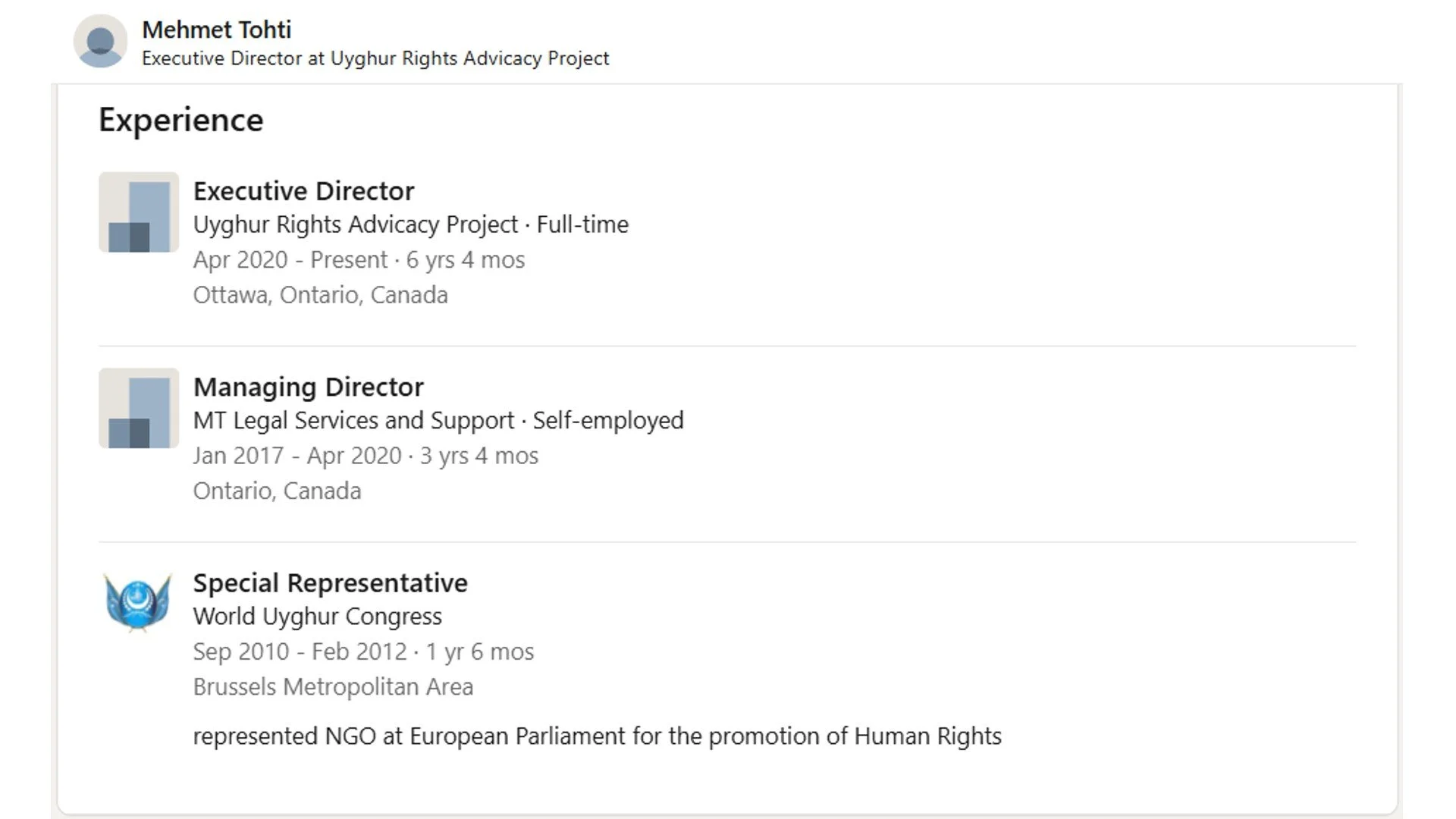
This author earlier explained:
“In 2004, Tohti was a co-founder of the NED-funded World Uyghur Congress. He was a ‘Special Representative’ of the WUC to the European Parliament between 2010 to 2012, and even served as Vice-President of the World Uyghur Congress for two separate terms.”
Who funded URAP? None other than the NED.
What was the NED also busy helping get set up in the first half of 2020? The Inter-Parliamentary Alliance on China which came online in June 2020.
An archived version of URAP’s site from July 2020 declared that “[We are] pushing to have Parliamentary Hearing around July 20 or 21 in Ottawa.” They succeeded in this goal.
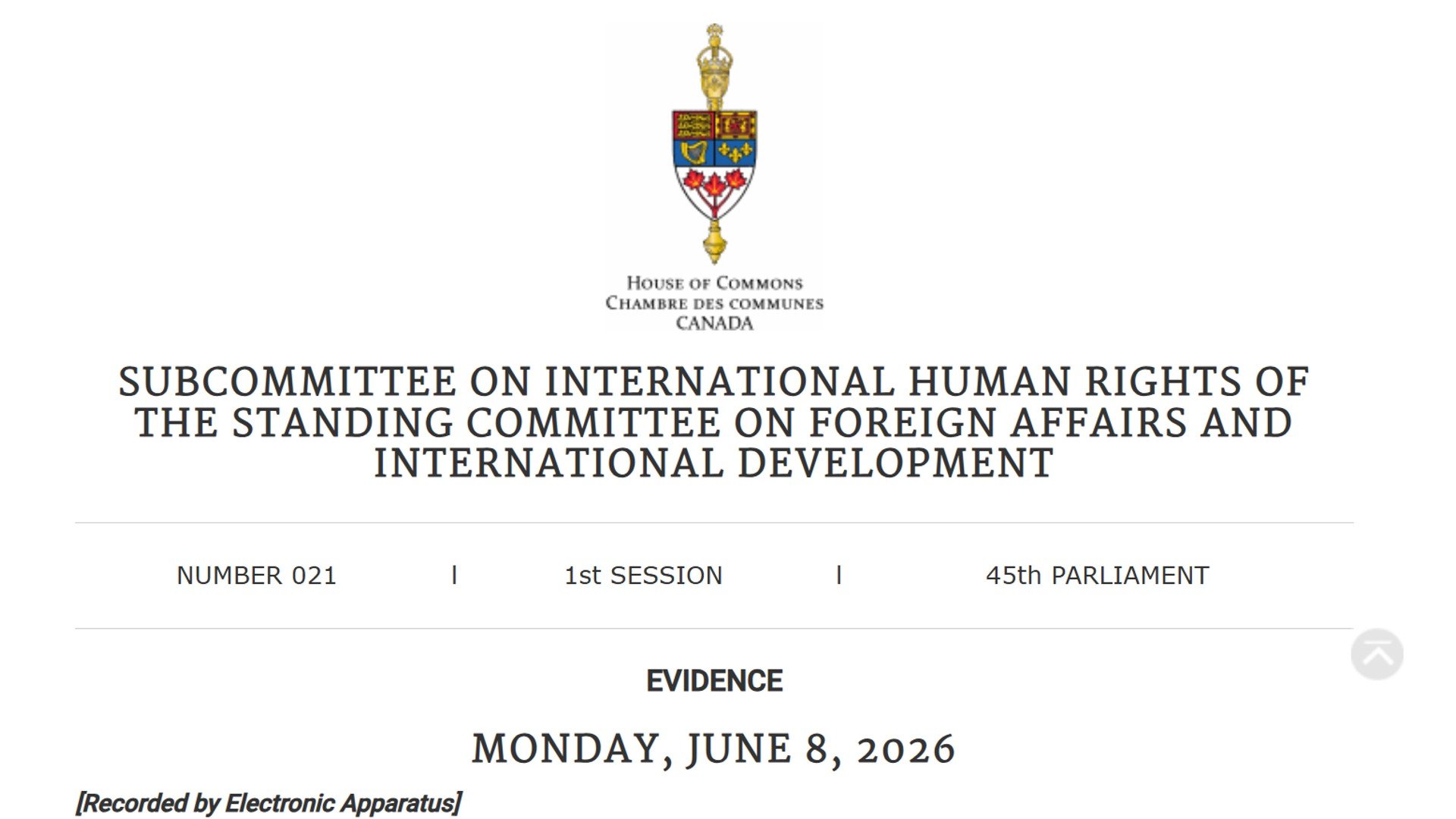
On July 20, 2020, Tohti testified to the Canadian parliament’s Subcommittee on International Human Rights of the Standing Committee on Foreign Affairs and International Development (SDIR), condemning China with the debunked claim that 80 per cent of Chinese women have been sterilized, while also. He also falsely claimed that Uighurs are having their organs harvested and sold, parroting reports which Ryan McCarthy explained “derive from front groups of far-right cult Falun Gong,” in a Grayzone article.
A week later, the SDIR Co-chair, Conservative MP David Sweet, and members Conservative MP Garnett Genuis and NDP MP Heather McPherson had become members of IPAC. These IPAC members were also members of the Uygur friendship group assisted by URAP.
By then, five of eight MPs in the subcommittee were members of the unofficial Parliamentary Uyghur Friendship Group set up on February 28, 2020, which URAP praised and worked closely with.
What also occurred on this day? An event titled: “Tibet and International Law: Challenging China’s False Historical Narrative on Tibet”, hosted by the Raoul Wallenberg Centre for Human Rights.
This came from NED money:
“Raoul Wallenberg Centre for Human Rights took $20k in NED funding to run an event in the same year, which promoted ‘awareness of recent legal scholarship that challenges the People’s Republic of China’s historical claim to Tibet.’
But more than just the event, that money also went to ‘build support for stronger legislative and policy action on Tibet’ and increase collaboration ‘among international parliamentarians on global Tibet initiatives.’”
Was the RWCHR the only organization involved to take NED funding that year? Not at all.
A co-sponsor of this event was none other than the Canada-Tibet Committee, who took NED funding that year. They took $38k USD in NED funding for a project called “Promoting Awareness of Tibetan Human Rights”, with a commitment to “convene a series of regional workshops [in 2020] to build support for stronger legislative and policy action on Tibet in Canada”.
The exact ‘landmark report’ the event promoted is that of Professor Michael van Walt called (Archive.is) “Tibet Brief 20/20” in November 2020, where he formally denied China’s sovereignty over the recently re-named Xizang Autonomous Region. CTC itself noted (Archive.is) that Michael van Walt was at that time, the “private lawyer to the HH Dalai Lama and a top advisor for the Tibetan adminstration [US-funded Central Tibetan Administration]”. Note that this event also has RWCHR involvement in its organization.
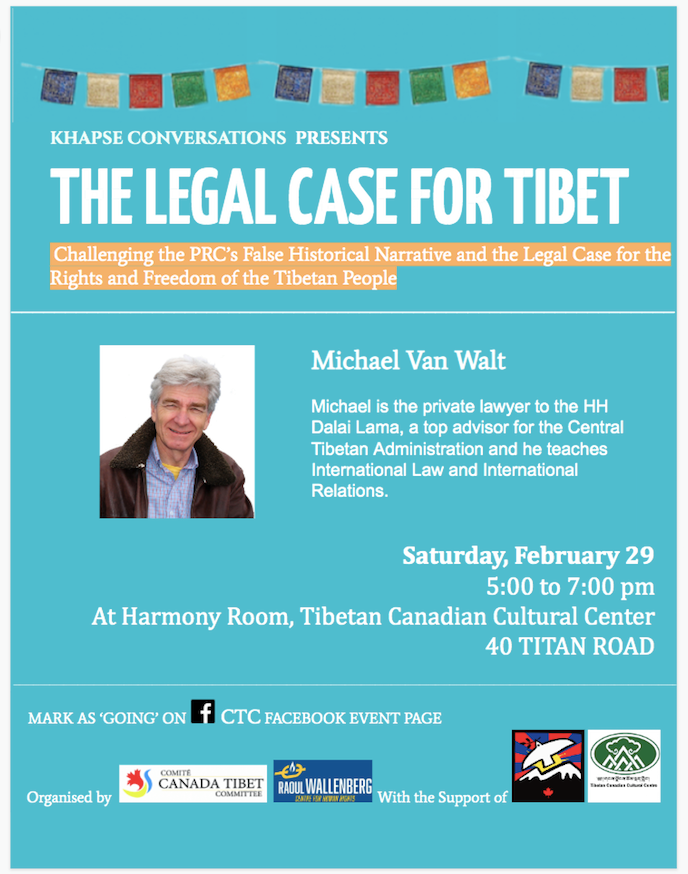
CTC’s involvement in events surrounding Michael van Walt’s blunt claims that China ‘invaded Tibet’ and doesn’t have sovereignty over the Xizang Autonomous Region (called Tibetan Autonomous Region back then) vindicates The Canada Files’ consistent position that the CTC seeks an independent ‘Tibet’ in the future, if China can be weakened enough over time.
On October 21, 2020, after the testimony of other Western-funded diaspora groups, think tankers, and the occasional misguided activist or academic, the SDIR released a report denouncing China, accusing it of genocide in the Xinjiang Uygur Autonomous Region. An eye catching demand missed in the past was for Canada’s governnment to:
“provide support through international overseas development assistance to civil society organizations especially in countries that are geopolitically important to China's Belt and Road Initiative who are raising awareness about the persecution of Uyghurs and other Turkic Muslims in Xinjiang”
In the end, this led to the non-binding motion in the Canadian parliament on February 22, 2021, calling for Canada’s government to declare China was committing a ‘genocide’ against Uygurs in the XUAR, which was voted for unanimously (except for the Liberal cabinet which abstained).
When Canada’s Senate voted against of a similar motion in June 2021, it led to NED-funded URAP becoming enraged and claiming that “Mr. Yuen Pau Woo has been acting as a spokesperson for China rather than for Canada.” URAP promised to retaliate against Pau Woo by campaigning for his expulsion from the Senate.
In February 2023, Canada’s parliament voted unanimously for IPAC member MP Sameer Zuberi’s Motion M-62 which led to a Canadian government commitment to import 10000 Uygur ‘refugees’ by the end of 2025.
That same month, the same SDIR of Canada’s Parliament got busy promoting Tibet Action Institute’s (NED-funded organization) false narrative that boarding schools in the Xizang Autonomous Region were ‘colonial boarding schools’ through a ‘study’ that went on to promote anti-China political groups and activists.
In the end, this ‘study’ led to a non-binding motion in Canada’s parliament during June 2024, with a unanimous vote, referring to Tibetans as “a people and a nation” who “can claim the right to self-determination”.
Only two months later, under pressure from the US government, a misguided national labour union (UNIFOR)’s leadership and corporate allies in Canada, the Canadian government imposed 100 per cent tariffs on Chinese electric vehicles (EVs). The US had imposed the same level of tariffs that May.
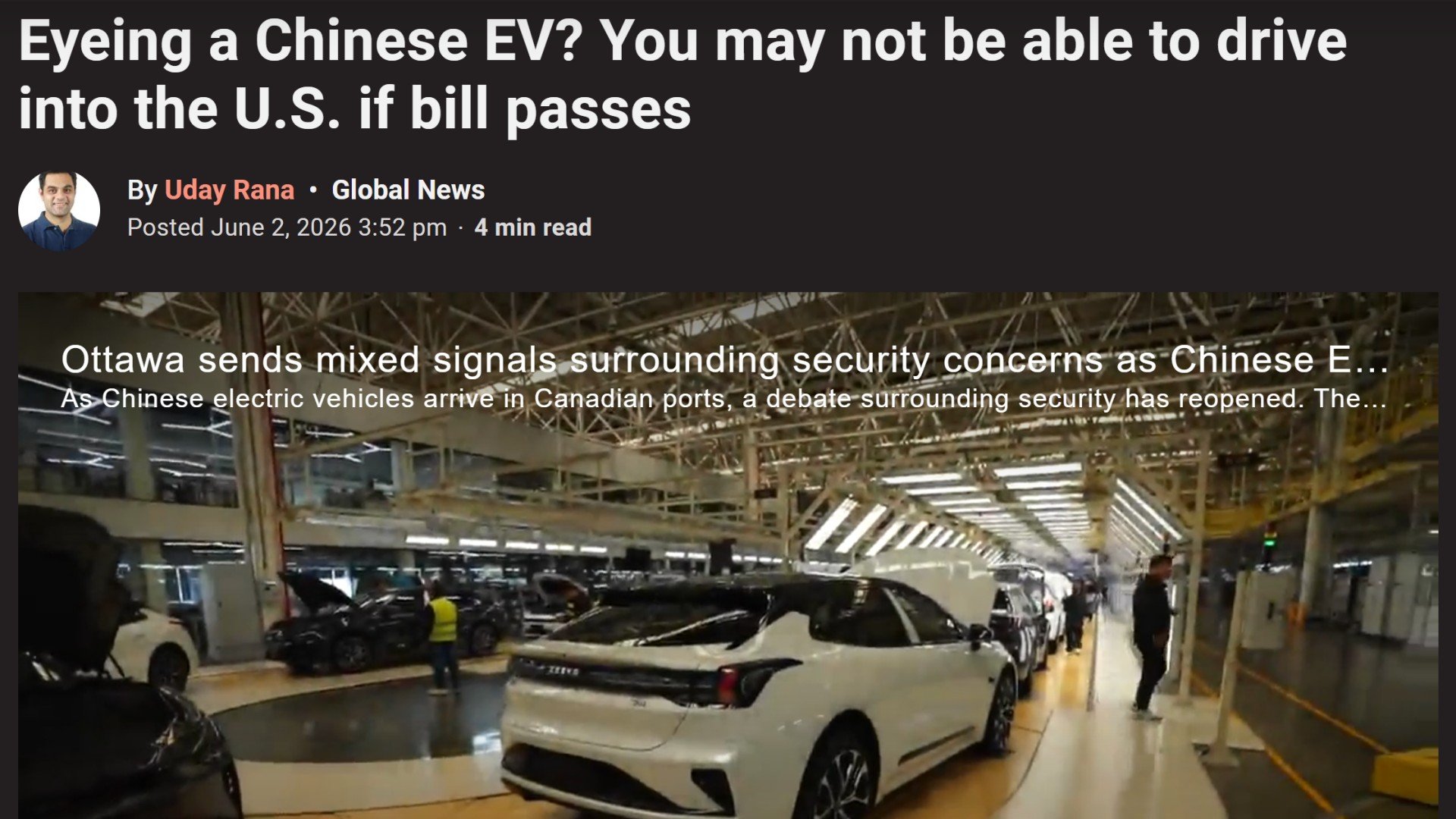
Now, with a government in Canada that says it wants better, pragmatic relations and more trade cooperation with China, is under pressure from the US surrounding its move to allow in 49000 Chinese EVs at a 6.1 per cent tariff rate. Legislators in the US have even proposed a bill that, if passed, would see Chinese vehicles purchased in Canada from entering the US.
Will decisions surrounding Canada’s relations with China be made in Canada or the US going forwards? That will be up to the Canadian people to decide.
Aidan Jonah is the Editor-in-Chief of The Canada Files, an independent news outlet covering Canadian foreign policy with a strong focus on Canada-China relations. Jonah wrote a report for the 48th session of the UN Human Rights Council, held in September 2021.
More Articles