Liberal government ‘Tibet’ advocates run amok, building upon decades-long Canadian government support
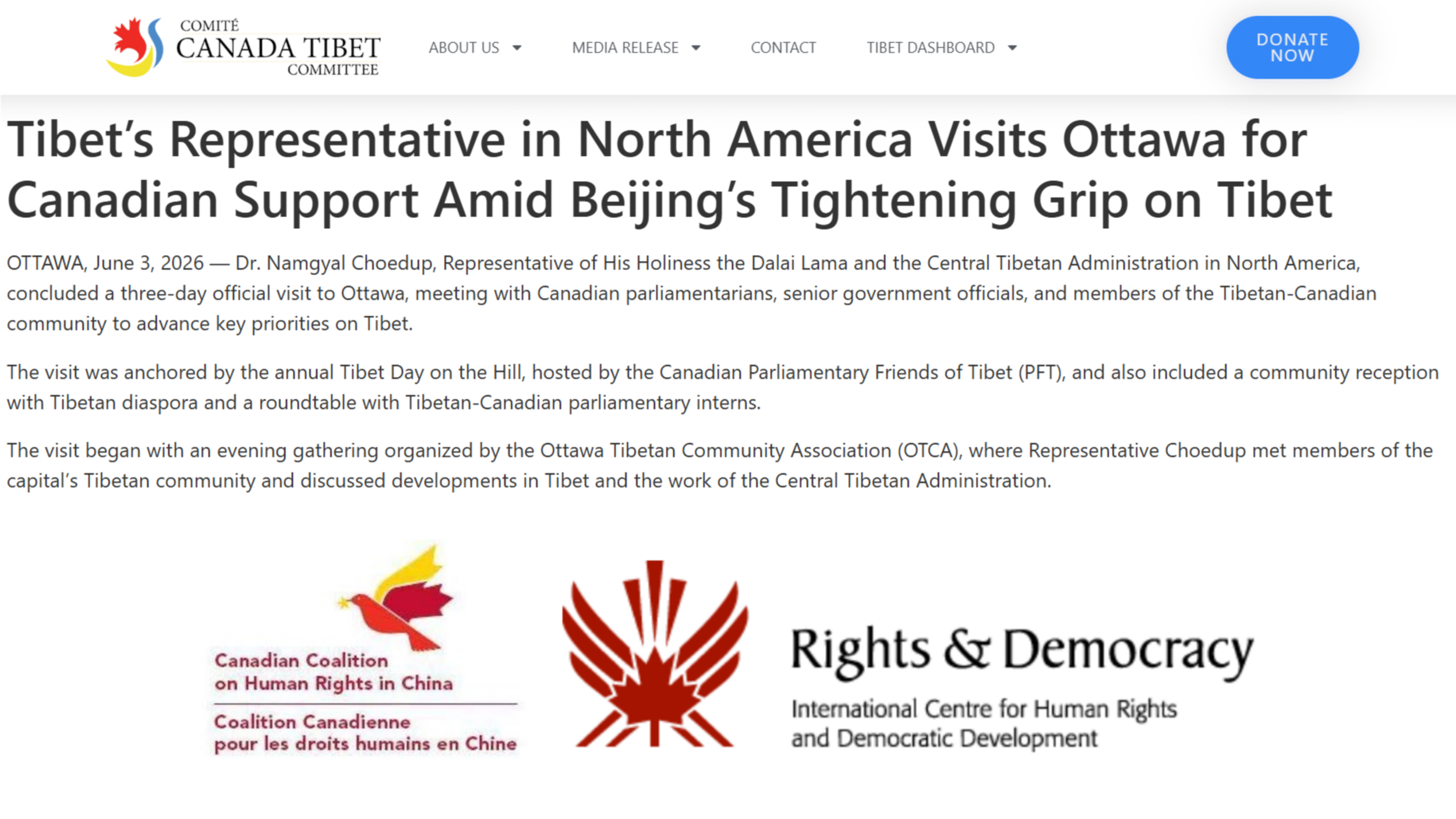
Caption: An image combining screenshots of a page on the Canada Tibet Committee’s website, and two logos from different groups (the coalition still being active, while the organization was ended during the early 2010s).

Editor’s note: The Canada Files is the country's only news outlet focused on Canadian foreign policy. We've provided critical investigations & hard-hitting analysis on Canadian foreign policy since 2019, and need your support.
Please consider setting up a monthly or annual donation through Donorbox.
Extra editor’s note: The new name of the region of China focused on in this article, is the Xizang Autonomous Region (previously known as the Tibet Autonomous Region). However when dissident movements are referred to, references to ‘Tibet’ in any part of the article are utilised to clearly label the ‘Tibetan’ separatist aim of securing an independent nation.
The logic behind the name change is deeply historical: China had moved to change its spelling system (at the state level) to a Mandarin-based one all the way back in 1958 and the State Council pushed this system as a national standard in 1978. However, around 1980, the efforts to push mention of Xizang versus Tibet went dark for many decades, until more recently.
Another part of the name change, was to avoid false ideas which ended up emenating from the name “Tibet”, driven by the 14th Dalai Lama’s usage of the “Greater Tibet” term that includes other Chinese regions including Sichuan, Yunnan, Qinghai and Gansu.
Written by: Aidan Jonah
While Canada’s government pretends to be determined to thaw Canada-China relations, the actions of its MPs towards China’s sovereignty say otherwise. Canada has backed Tibetan separatists as far back as the 1990s through its own National Endowment for Democracy (NED)-equivalent, created in 1988. All this coming as Canadian political elites continue to talk endlessly about supposed Chinese plots to interfere in Canadian politics, that when ‘exposed’ tend to come with exactly zero court case eligible evidence.
Canada’s NED-equivalent, Rights & Democracy (R&D) had a former staffer of an NED organization (National Democratic Institute) as its last President (bolds added):
“Gérard Latulippe was named President of Rights & Democracy in early March, 2010, and officially assumed his duties on March 29. Prior to his appointment, Mr. Latulippe served as Resident Director in Haiti for the Washington-based National Democratic Institute (NDI). Before that, he was NDI's Country Director in Morocco and its senior representative in the Maghreb region.”
Canadian parliamentarians and the foreign affairs department of Canada made the time to receive a visit from the Tibetan separatist Central Tibetan Adminstration (with a long history receiving NED funds, and even briefly Canadian government funds further back), at the beginning of June. Accompanying the CTA was Canada Tibet Committee (CTC)’s Executive Director, Sherap Therchin, who was “Deputy Chief of Tibet Fund India, with responsibility for oversight and evaluation of USAID projects supporting education and healthcare in Tibetan refugee communities” between 2013 to 2015.
But this wasn’t the first visit of a CTA leader to Canada. Previously, TCF covered how four Liberal cabinet ministers and another 20 Liberal MPs met the CTA leader in November 2023. Such visits have been going on for more than two decades.
Lessons can be drawn from PFT internship program
To understand the commitment of the Liberal party to backing Tibetan separatism, consider the new cohort of interns with Canada’s Parliamentary Friends of Tibet internship program, which began in 2009. Six of the seven MPs with an intern are Liberal MPs.
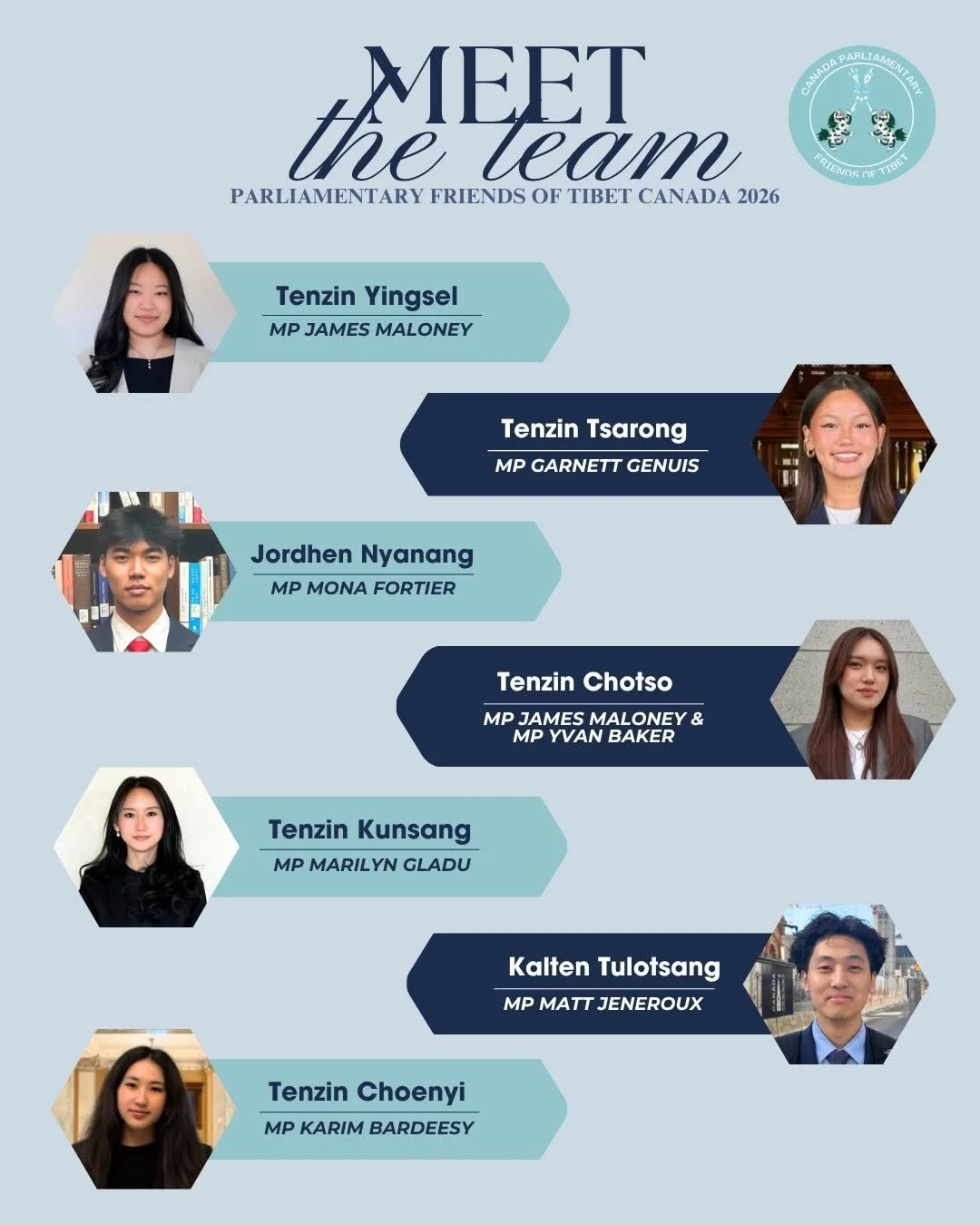
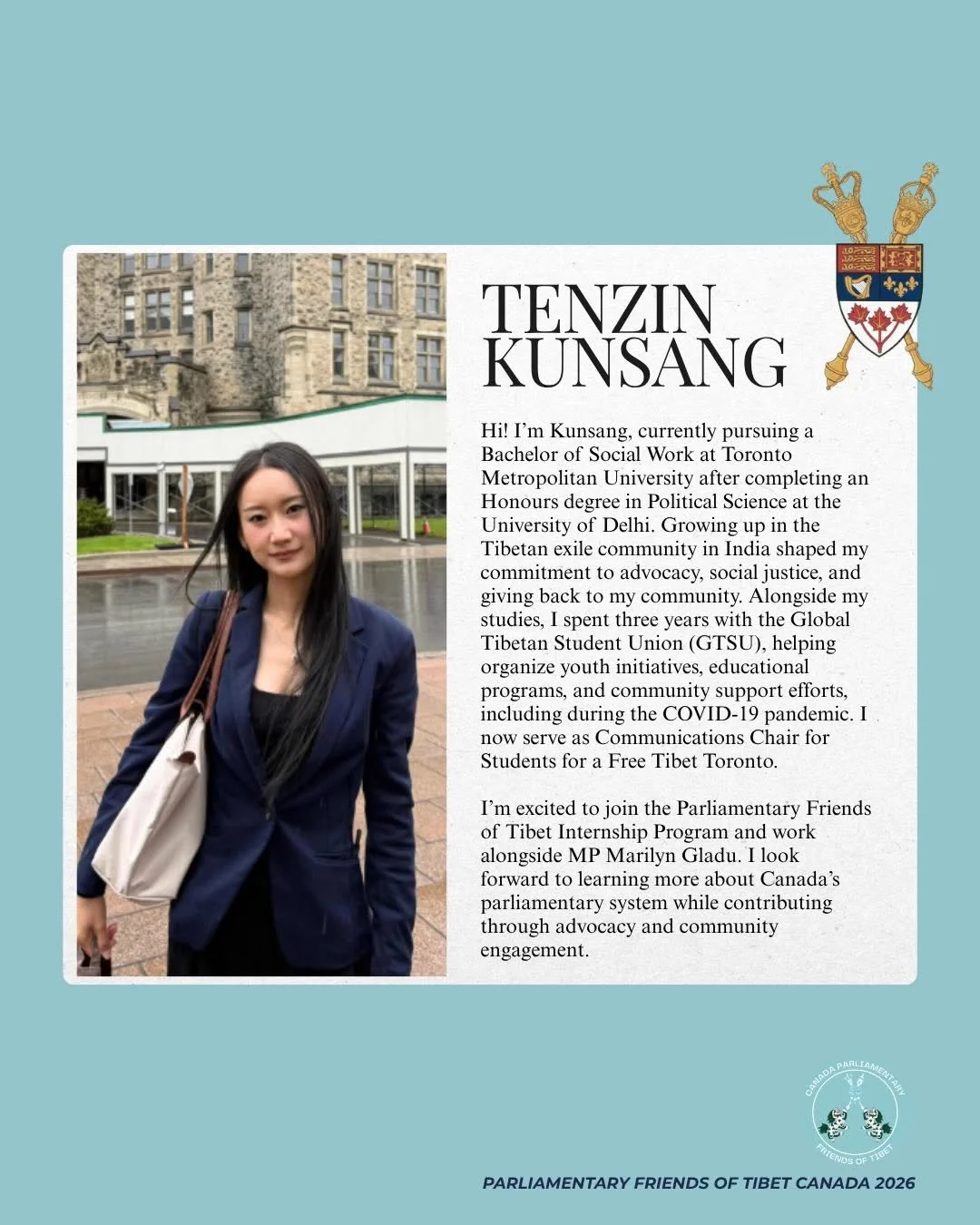
Liberal MP Marilyn Gladu’s intern is Tenzin Kunsang, who came from the “Tibet exile community in India”, similar to a particular Ontario MPP and failed MP candidate Bhutila Karpoche, who came from Nepal. Just like Karpoche, she is also active within a branch of Students for a Free Tibet within Canada (Toronto specifically).
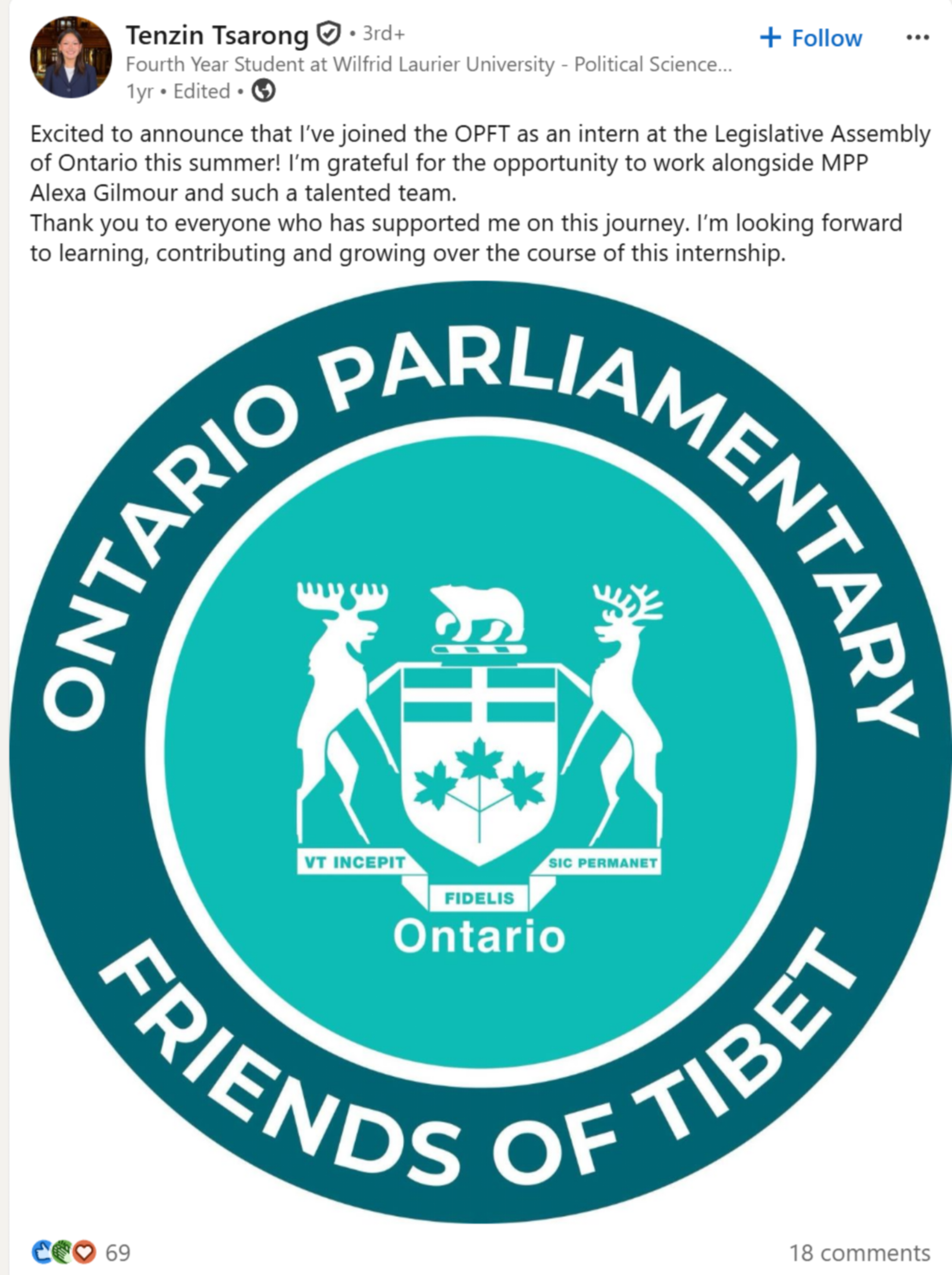
The co-chair of Inter-Parliamentary Alliance on China’s Canadian cohort, Conservative MP, Garnett Genuis, has his own PFT intern: Tenzin Tsarong. Why of interest? Because she formerly interned at Queen’s Park for NDP MPP Alexa Gilmour, under the Ontario PFT internship program, initiated by former Ontario NDP MPP Bhutila Karpoche in Summer 2019.
The Canada Files has previously argued that the Federal and Ontario PFT internship programs are vehicles to get more so-called ‘Tibetan diaspora’ voices into parliament and legislature, and help them gain influence in the overall Chinese Canadian diaspora at the expense of pro-cooperation or pro-China voices.
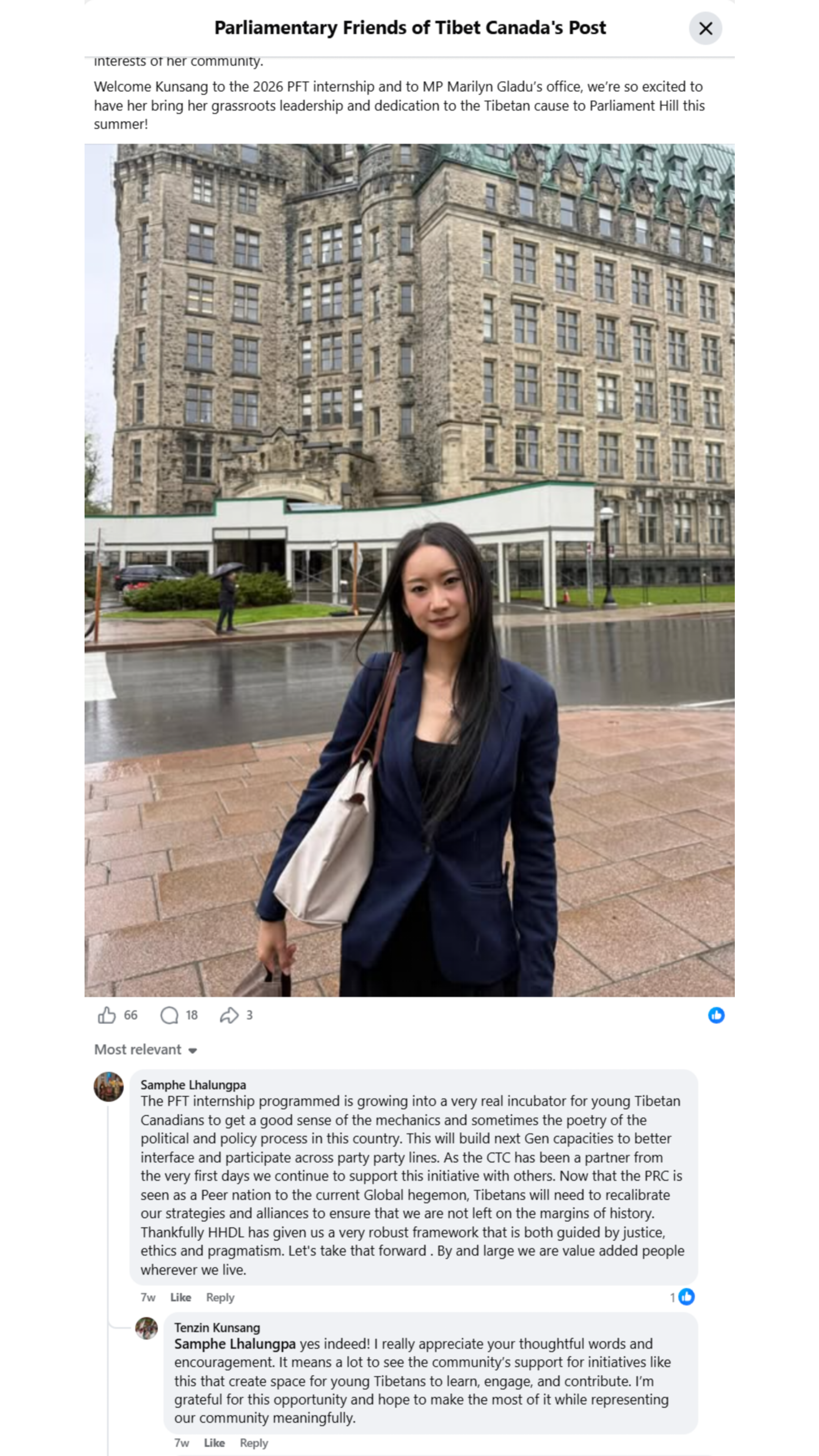
Now, the Chairman of the Board of the Canada Tibet Committee, Samphe Lhalungpa, admitted the utility of the PFT internship program centers around being a:
“very real incubator for young Tibetan Canadians” to understand political and policy development in Canada, serving to help “build next Gen capacities to interface and participate across party lines.”
This author had previously explained, back in 2023, that the program ensures that:
“young dissidents have been able to build connections and influence, on the Canadian taxpayer’s dime. That’s because the interns participating in parliamentary internship programs are paid from an MPs designated member’s office budget. According to the Hill Times, as of 2017, “an MP’s basic office budget is $355,400, from which all staff wages must be paid, including ‘salaries, service contracts, some operating and travel costs, and other expenses.’”
This is not a critique of the individuals interning, but rather of the broader political efforts to ingratiate anti-China forces at the highest level of Canadian politics. More on that later.
But the nature of the Tibet separatist movement should be understood before going any further. As this author explained back in 2023:
The ‘Tibetan freedom struggle’ from its beginning has consisted of a CIA-funded theocratic fight-back against the PRC’s liberation of Tibetan serfs from a theocracy which was “not even recognized by any other countries as an independent state until the Communists gained control of Tibet and China as a whole.”
Declassified Canadian cables from 1950 described the Tibetan regime as such:
‘The spiritual and temporal spheres of authority are combined in a theocracy under the Dalai Lama, who is believed by Tibetans to be a reincarnation of a Buddha and who resides in a monastery-palace in Lhasa. The administrative system is maintained chiefly through the local authority of the wide-spread monasteries, which are linked together by a common veneration for the parson of the Dalai Lama.’…
since becoming ‘an autonomous region of China, the Tibetan people have seen a drastic improvement in life expectancy and living conditions. After the CIA backed counter-revolution failed, more than 1 million serfs, 95 per cent of Tibet’s population were freed from serfdom. The average life expectancy of a Tibetan was 35.5 years before the PLA took control of Tibet, and rose to 70.6 years as of 2019’, while also protecting Buddhism. The state delivering these achievements is what Tibet dissidents are fighting against.”
Is the Canada Tibet Committee afraid of The Canada Files?
The rather infamous Canadian parliament Subcommittee on International Human Rights is a past driver of the Xinjiang genocide claim in Canada, all the way to a unanimous 2021 parliamentary vote which saw parliament unanimously demand (with the Liberal cabinet abstaining) Canada’s government declare that China was committing a genocide in its XInjiang Uygur Autonomous Region (XUAR). It also helped push ‘Tibetan boarding schools are just like Canadian residential schools’ claim which the Canadian government declined to oppose in a response in October 2023. The smears of these boarding schools eventually led to a June 2024 parliamentary vote that was an open endorsement of Tibet separatism.
In an April 20, 2026 hearing, the subcommittee took the testimony of CTC’s Executive Director, Sherap Therchin. At this point, it must be understood that The Canada Files had gone dark for nearly five months, not having posted anything since November 27, 2025.
During the testimony, Therchin complained that:
“There's also an unverified website called The Canada Files, which has been compiling information on Tibetans speaking out on human rights issues, labelling us as ‘foreign proxies’ actually, which is very ironic.”
What he meant by unverified, The Canada Files does not know. TCF does have the blue verified badge on X, but this author doubts Therchin is referring to this social media network.
We certainly previously said that the Tibet separatism movement has been CIA-backed since its early days, though that obviously does not mean each activist or organization is backed by the CIA. For clarity, TCF covered the CTC’s taking of a grant from a US-government organization, the National Endowment for Democracy, in 2020 as such:
“The project the Canada-Tibet Committee took $38k USD in NED funding for was called ‘Promoting Awareness of Tibetan Human Rights’, with a commitment to ‘convene a series of regional workshops [in 2020] to build support for stronger legislative and policy action on Tibet in Canada’. The description is a blunt commitment to interfere in Canadian politics, yet again making a mockery of Canadian sovereignty.”
Moreover, when Inter-Parliamentary Alliance on China (IPAC) member Liberal MP Sameer Zuberi (of note for pushing through a motion [M62] passed by Canada’s parliament via a unanimous vote in 2023, that confirmed a commitment to import 10000 Uygurs into Canada) asked “Have you reported these incidents to the Canadian authorities? If so, what action, if any, has been taken around that?”, Therchin responded that “we [CTC] have informed our contact person within Global Affairs, yes.”
Given TCF’s long period of silence, it fascinated the author that CTC felt concerned enough about our coverage to complain about it in a Canadian parliament subcommittee and perhaps earlier to a contact person within Global Affairs Canada (GAC) [Canada’s foreign affairs ministry].
Therefore, this author felt it was time to learn more about CTC, and to better understand the organization who was haunted by the spectre of The Canada Files.
The Canada Files has contacted Canada Tibet Committee to understand if we were mentioned to their Global Affairs Canada contact person, but has not received a response yet.
CTC and Canada’s past NED-equivalent, Rights & Democracy
A replacement for Rights & Democracy, Canada’s past NED-equivalent (explained here) was pushed by forces within the Canadian parliament during former Canadian PM Justin Trudeau’s second term (2019-2021), but failed to receive enough support in parliament. While Canada’s regime change and sovereignty-violating activities have been moved to the foreign affairs ministry more broadly, history must be remembered.
After becoming curious and investigating, The Canada Files found a historical relationship between Rights & Democracy and the Canada Tibet Committee.
Carole Samdup was a staffer with Rights & Democracy staffer for 18 years (beginning in 1994). She is noted as being the wife of Thubten Samdup (CTC’s former President, 1987 to 2004), with them being co-founders of CTC “in the early 1980s” (formal year, 1987). While working for R&D, she was a CTC member who attended the “Beijing Women’s Conference in 1995”. In 1997, she referred to “China’s invasion of Tibet” in a Fall newsletter released by the CTC.
Later, Carole Samdup worked as CTC’s Executive Director from 2012 to 2020.
It is no surprise that CTC drove the Parliamentary Friends of Tibet’s founding in Canada, in 1990:
“The CTC made inroads with the Canadian government in 1990 by helping form the Parliamentary Friends of Tibet, a group of Parliamentarians whose mission is to represent Tibetan interests with Canadian parliamentarians.”
The separatist intentions of Canada Tibet Committee are made clear in this quoted section of a 2007 CTC commemorative book [PDF] celebrating 20 years of operations (bolds added):
“Sam kept at it for years, and was eventually elected the President of the Tibetan Cultural Association. But as Tibet’s plight worsened, his focus shifted from folk dance shows and multiculturalism to the more urgent matter of Tibet’s survival as a sovereign nation and people…
That year [1987] he started the Canada Tibet Committee (CTC), an independent, non-governmental organization committed to the preservation of Tibetan culture and that restoration of Tibet to its status as an independent state.”
Later pushes for “autonomy” are unserious. The CTC’s actions included (bolds added):
In 2014, their “About Tibet” section contained the statement that “Tibetans are now a minority in their own country due to the continuous influx of Chinese immigrants.”
Celebrated the failed 1959 CIA-backed pro-feudalism uprising in 2010 commemorations
During the same year, highlighted a Canadian government staffer’s 1950 legal opinion “that Tibet is, from the point of view of international law, qualified for recognition as an independent state”
In 2004, published an article in their newsletter calling Chinese ‘immigrants’ in China’s formerly named Tibetan Autonomous Region.
All this occurred back when China wasn’t as powerful as it is today. These later pushes have only occurred because Tibet separatists are coping with a weakened position and need to buy time in hopes of China faltering and becoming weak enough to violate its sovereignty completely, and obtain full independence at such a time.
Considering Thubten Samdup’s line of reasoning when asked in 2004 about why the Dalai Lama wasn’t demanding independence recently, this author believes their earlier analysis to be quite reasonable:
”This has been the subject of a constant debate among the Tibetan diaspora, and even the Tibetan parliament-in-exile left the decision up to the Dalai Lama, basically. I think it has something to do also with the Buddhist philosophy: we believe in impermanence. Things change all the time; things don't remain the same. And the Dalai Lama has a very strong belief that China is going through a very great transformation. It is going to change; sooner or later it has to change for China proper.
Within the context of China today his immediate concern is the disappearance of Tibet's unique culture and religion. He feels that perhaps through a genuine dialogue with no preconditions we would come to some sort of understanding where the Chinese central government would respect Tibet's uniqueness and let the Tibetans run their own internal affairs…
The choice is up to us, and if we wish to save Tibet, perhaps the time to do something is while the Dalai Lama is alive, because then you may see that this problem can be resolved peacefully. Otherwise, it will be another conflict area in the world that is out of control.”
Looking back to Carole Samdup, during her time as a staffer with R&D, Samdup testified in a May 5, 2004, parliament subcommittee hearing, confirming cooperation between R&D and CTC. Samdup said (bold added):
“The problem is that when you have a public venue, such as the policy seminar that Rights and Democracy organized with the Canada-Tibet Committee last week.... For that event, we sent out upwards of 35 invitations to Canada's largest corporations, those active in China and members of the Canada-China Business Council. Not one of them could participate; not one of them responded positively.”
Around two weeks earlier, R&D had promoted a Canada Tibet Committee campaign which began in 2000. This promotion came on the second-last day of the Dalai Lama’s visit to Ottawa between April 21-24, 2004, which came via the invitation of the CTC.
At the aforementioned parliament subcommittee hearing, Samdup said about the Canadian International Development Agency (CIDA [bolds added]):
“As you probably know, CIDA has recently adopted a new policy framework for its work in China. That policy framework will be in place for about five years. The framework prioritizes western development, so CIDA will be looking to move its operations, in part to respond to the concerns that the work they're doing in the eastern regions is really not very critical because the eastern regions are quite well developed already, industrialized. So they will move their emphasis to the western regions, which include Tibet.”
On May 12, 2004, Samdup said that “We've been working with the Government of Canada on the situation of Tibet for almost 20 years now”. He also revealed a seemingly unimportant detail in his second testimony to the same subcommittee:
“The Canada Tibet Committee is an active member of the Canadian NGO coalition on China. For the past six years, the coalition has been asking both the department of foreign affairs and the parliamentary standing committee on foreign affairs to evaluate the effectiveness of Canada's bilateral human rights dialogue in China.”
Why? Because the R&D’s 2002-03 Annual Report reveals that “introductory remarks by Carole Samdup on behalf of the Canadian NGO Coalition on China” were made at “Department of Foreign Affairs and International Trade Consultations on February 5, 2003.”
Therefore, we are currently looking at a minimum three-and-a-half year period of the Canadian government funded NED-equivalent backing an anti-China coalition, during the time Canada was supposedly ignoring human rights to focus on trade. But why so long?
Because, in October 2006, the Canadian Coalition on Human Rights in China wrote to then Prime Minister Steven Harper, speaking of, in “In May 2005 and June 2006”, co-organizing “roundtable discussions with the Human Rights Division of Foreign Affairs Canada to press for a formal evaluation of the bilateral dialogue and, with it, a strengthened approach to the promotion of human rights in China.” They made a number of demands, focusing on an escalation of Canadian scrutiny on China’s human rights record.
They welcomed then-PM Harper to “to contact us through Carole Samdup at Rights & Democracy”.
Those included under the ending of the letter included:
Luisa Durante, National Coordinator of Canada Tibet Committee
Cheuk Kwan, Chair of the Toronto Association for Democracy in China
Xun Li, President of the Falun Dafa Association of Canada
Jean-Louis Roy, President of Rights & Democracy
Mohamed Tohti, President of the Uyghur Canadian Association
What did this letter reveal? That the listed organizations had “been working together since 1993 to promote human rights in China” (WebArchive/Archive.is), conveniently coming together during the same year that R&D began focusing on promoting ‘human rights’ in China. CTC helpfully confirmed itself to be “a co-founder and member of the Canadian Coalition on Human Rights in China”. (WebArchive/Archive.is).’
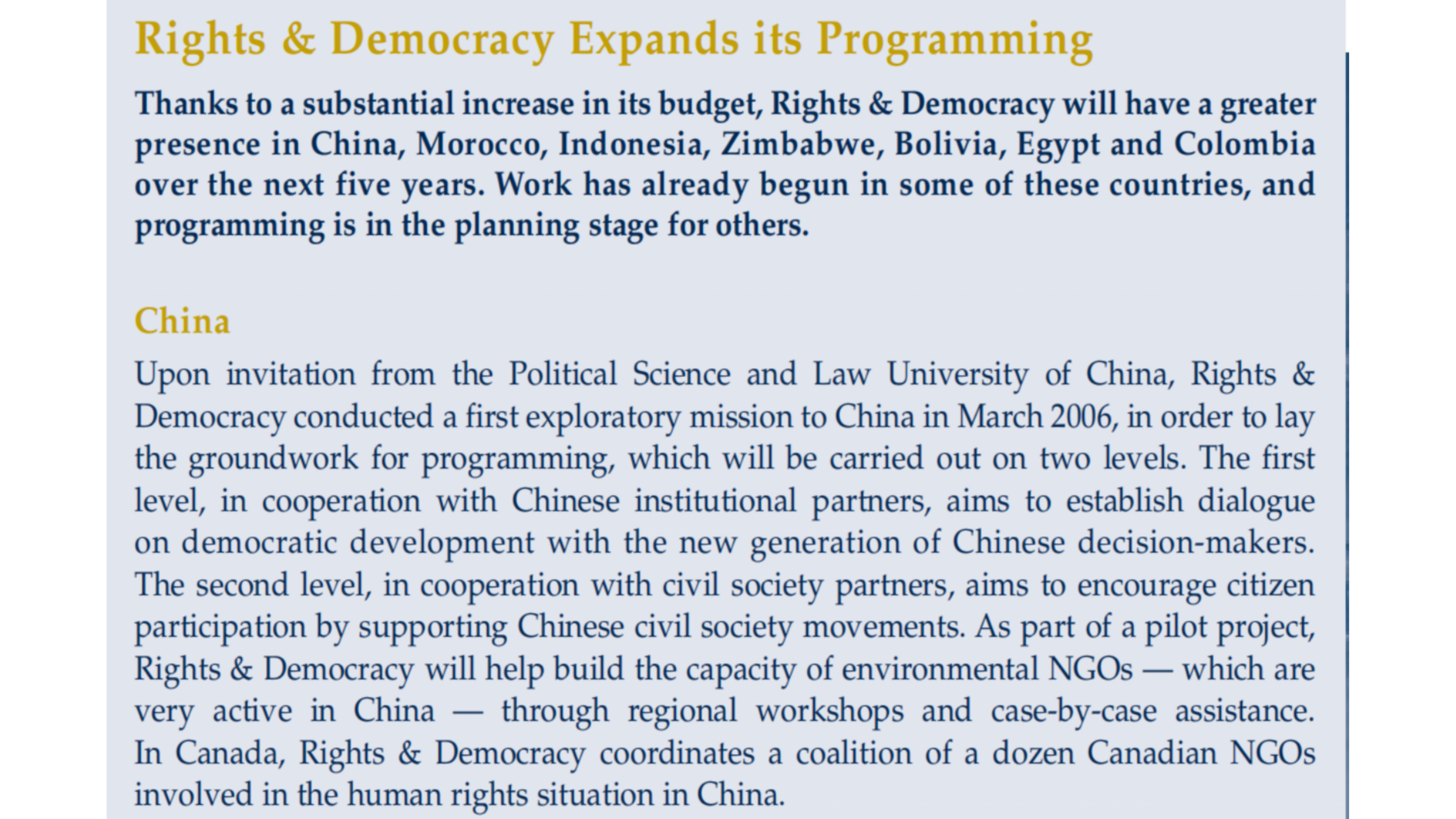
More specifically, R&D said in its 2005-06 annual report, that:
“In Canada, Rights & Democracy coordinates a coalition of a dozen Canadian NGOs involved in the human rights situation in China.”
Now we know that the R&D and CTC relationship lasted for 13 years minimum, with Carole Samdup of the CTC joining the R&D as a staffer in 1994, while still serving “on its [CTC’s] executive committee until 2002” and also serving “as the first Co-Chair of the International Tibet Network (ITN)”. Samdup would remain as an R&D staffer until 2012.
In 2007, R&D publicly admitted that its cooperation with the Tibet separatists was quite extensive, including funding to assist CTC projects and ambitions:
“Rights and Democracy has encouraged democratic development within the Tibetan diaspora. Funds were provided to the Central Tibetan Administration to acquire an internet connection in 1993, enabling the creation of a virtual community for Tibetans in exile. In 1994, Rights and Democracy supported the Tibetan Women's Association by providing diplomacy training in preparation for the Fourth United Nations World Conference on Women, held that same year. In 1998, Rights and Democracy awarded its John Humphrey Freedom Prize to Palden Gyatso in recognition of his tireless efforts to expose the conditions of imprisonment in Tibet. In 2002, Rights and Democracy provided financial assistance to the Canada-Tibet Committee for the publication of the document Poverty by Design: Economic Aspects of Discrimination in Tibet (Andrew Martin Fischer). In 2004, Rights and Democracy funded Professor Samdhong Rinpoche's (Prime Minister of the Tibetan Parliament in Exile) visit to Canada and organized a policy seminar with the Dalai Lama on the issue of peace negotiations, during which two preliminary documents were published: Negotiations between Tibet and China : A Leading Role for Canada , and Self-Reliance and the Right to Development in Tibet .”
The Canada Files’ request for comment to the Canada Tibet Committee has received no response. As well, TCF’s request for comment to Global Affairs Canada has also received no response. We will add an update, if one or both respond after this article’s release.
Just as the Canadian government actively assisted the assorted Ukrainian fascists into developing and growing the Bandera-honouring, Nazi SS division honouring Ukrainian Canadian Congress, through its own NED-equivalent, Rights & Democracy, Canada’s government actively assisted the Canada Tibet Committee in developing greater strength and relevance in the Chinese Canadian diaspora for at least 13 years, setting the stage for it to sustain itself until the West began the brazen segment of its push against China’s sovereignty and development in the end of the 2010s and throughout the 2020s.
The ramifications of R&D’s relationship with the Canadian Coalition on Human Rights in China go further than just the CTC side, though. A certain Mehmet Tohti of Uygur Rights Advocacy Project (URAP) later became President of Uyghur Canadian Association (UCA) before eventually founding URAP with US government money, and driving a vote in Canada’s parliament that saw China falsely accused of committing a ‘genocide’ in its Xinjiang Uygur Autonomous Region (XUAR). Canada’s government not only assisted the rise of the Tibet separatists but also the Uygur separatists in Canadian politics, years before Canada openly began funding the Uygurs through the immigration department and defending both them and the Tibetan separatists against Chinese sanctions.
It’s almost as if the Canadian government has sought to import and then forcefully promote the pro-imperialism factions of the Chinese Canadian diaspora into a dominant position since the time after WWII. Perhaps a news outlet covered this reality nearly three years ago, and later broke a story warning that the Canadian government funded a project which designed a ‘kill chain’ targeting dissenters in the Chinese Canadian community opposed to Canadian government hostility towards China.
Keep your eyes wide open and don’t let your heart’s desires cloud your analysis of a brutal reality.
Aidan Jonah is the Editor-in-Chief of The Canada Files, an independent news outlet covering Canadian foreign policy with a strong focus on Canada-China relations. Jonah wrote a report for the 48th session of the UN Human Rights Council, held in September 2021.
More Articles